



Marriage-Based Green Cards: What to Expect at the Interview
Marriage-Based Green Cards: What to Expect at the Interview
For many couples, the interview is the most stressful part of the marriage-based green card process. You have filed the forms, gathered the documents and waited for months. Now an immigration officer will sit across from you and ask about your relationship.
The good news is that preparation makes a real difference. This guide explains why the interview happens, what officers ask, what to bring and what comes next.
Why Is There an Interview?
The purpose of the interview is to confirm two things:
- The information in your application is accurate.
- Your marriage is genuine and was not entered into only to obtain an immigration benefit.
Officers review your forms and evidence before you arrive. The interview gives them a chance to ask follow-up questions and see how you and your spouse answer them.
Where Does the Interview Take Place?
It depends on where the immigrant spouse lives.
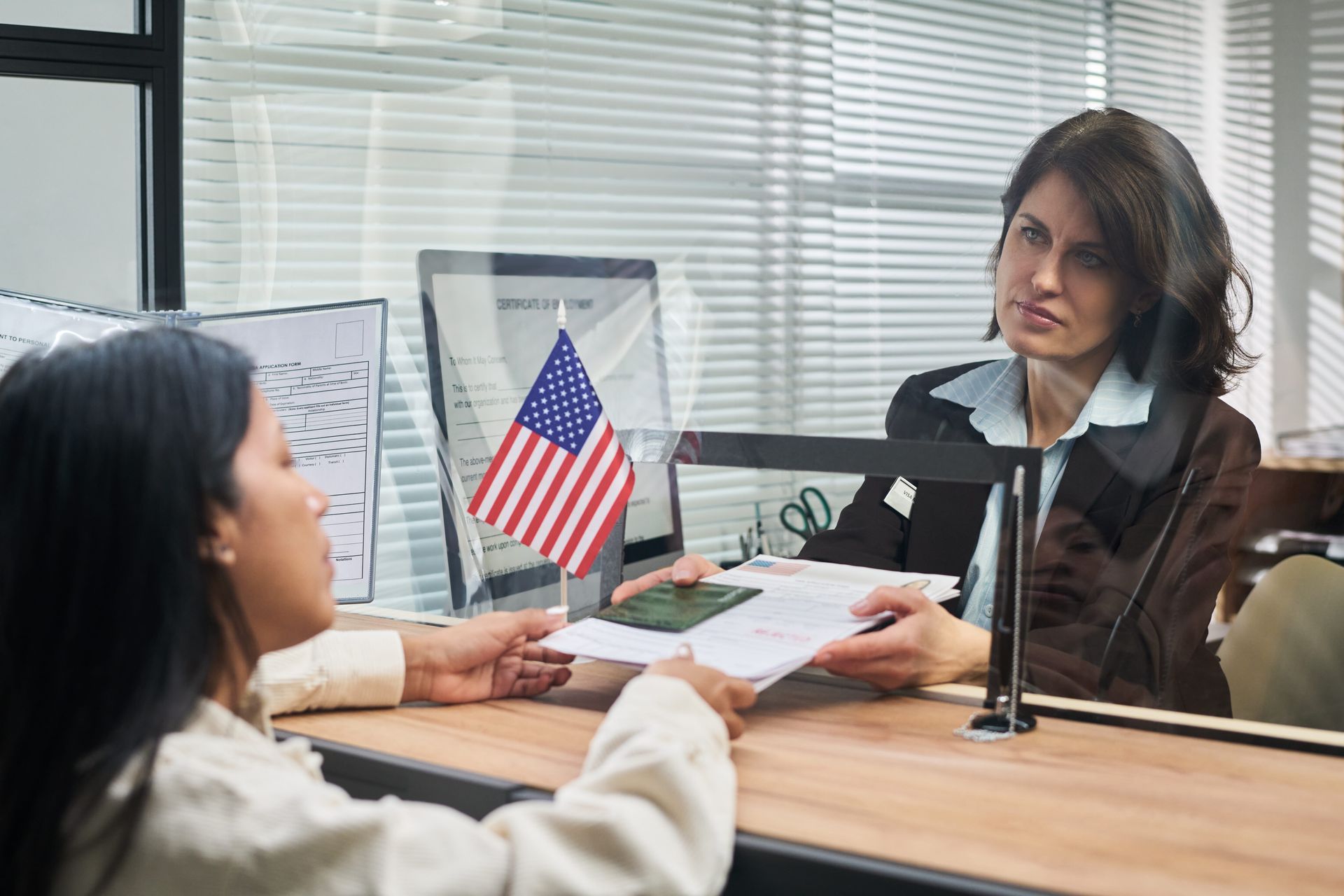
- Inside the United States: If you applied to adjust status, the interview is usually held at a USCIS field office. In most cases, both spouses attend together.
- Outside the United States: If the immigrant spouse is abroad, the interview takes place at a U.S. embassy or consulate. The sponsoring spouse usually does not attend.
What Documents Should You Bring?
Your interview notice will list what is required. In general, bring originals and copies of:
- The interview notice
- Passports and government-issued photo IDs for both spouses
- Birth certificates
- Your marriage certificate
- Divorce decrees or death certificates from any prior marriages
- The immigrant spouse's entry documents, such as the visa and I-94 record
- The sealed medical exam, if it was not already submitted
- Updated financial documents for the Affidavit of Support, such as recent tax returns and pay stubs
Evidence of Your Relationship
Bring updated proof that you share a life together. Helpful examples include:
- A joint lease or mortgage
- Joint bank account statements
- Joint tax returns
- Insurance policies listing each other
- Utility bills with both names
- Birth certificates of children you have together
- Photos over time with family and friends
- Travel records from trips you took together
Any document in a foreign language must include a complete English translation with a translator's certification.
What Questions Will the Officer Ask?
Questions vary, but most fall into a few groups.
Your relationship history
- How and when did you meet?
- When did you decide to get married?
- Who proposed, and how?
Your wedding
- Where was the ceremony held?
- Who attended?
- Did you take a trip afterward?
Your daily life
- Who wakes up first?
- Who cooks and who pays the bills?
- What did you do last weekend?
Your families and home
- Have you met each other's parents?
- How many rooms are in your home?
- What side of the bed do you sleep on?
The officer will also go over the yes-or-no questions on your application about your immigration and criminal history.
Tips for a Successful Interview
- Review your application together. Your answers should match what you filed.
- Be honest. If you don't know or don't remember, say so. Guessing causes more problems than admitting you forgot.
- Don't memorize a script. Rehearsed answers can sound unnatural. Simply talk through your history together beforehand.
- Organize your documents. Use labeled folders so you can find things quickly.
- Arrive early and dress neatly.
- Bring an interpreter if needed. Check your interview notice for the rules on interpreters.
- Consider bringing your attorney. You have the right to have a lawyer attend with you.
What If the Officer Has Doubts?
If the officer has concerns, you may be scheduled for a second interview. In that interview, spouses are often questioned separately and their answers are compared.
Common red flags include:
- Living at different addresses
- Major inconsistencies between your answers
- Little shared documentation
- A very short relationship before marriage
- Prior immigration violations or past marriage-based petitions
A red flag does not mean a denial. It means you need to be ready to explain your situation with clear evidence.
What Happens After the Interview?
There are several possible outcomes:
- Approval. Some couples are approved the same day or shortly after.
- Request for Evidence. The officer may ask for additional documents.
- Further review. The case may be held for background checks or a second interview.
- Denial. If this happens, you may have options. Read our article on what to do if your immigration application is denied.
Conditional Green Cards
If you have been married for less than two years when the green card is approved, the immigrant spouse receives a conditional green card valid for two years. To keep permanent residence, you must file a petition to remove the conditions during the 90 days before the card expires.
Frequently Asked Questions
How long does the interview last?
Many interviews last about 20 to 30 minutes, though some take longer.
Can we bring our children?
Check your interview notice. If your children are not part of the application, it is often easier to arrange child care.
What if we give different answers to a question?
Small differences are normal. Couples remember details differently. Officers look for major inconsistencies, not perfect matches.
Talk to a Florida Immigration Attorney
Preparing well can turn a stressful interview into a simple conversation. Attorney Maria Aguila of Florida Immigration Law Firm has more than 26 years of experience helping couples and families through the immigration process. We serve clients in English and Spanish, offer translation services, and meet in person or virtually.
Call 904-944-5539 to schedule a consultation. To learn more about other options for relatives, read who is eligible for a family-based immigrant visa.
This article is for informational purposes only and is not legal advice. Every case is different. For advice about your situation, speak with an immigration attorney.